
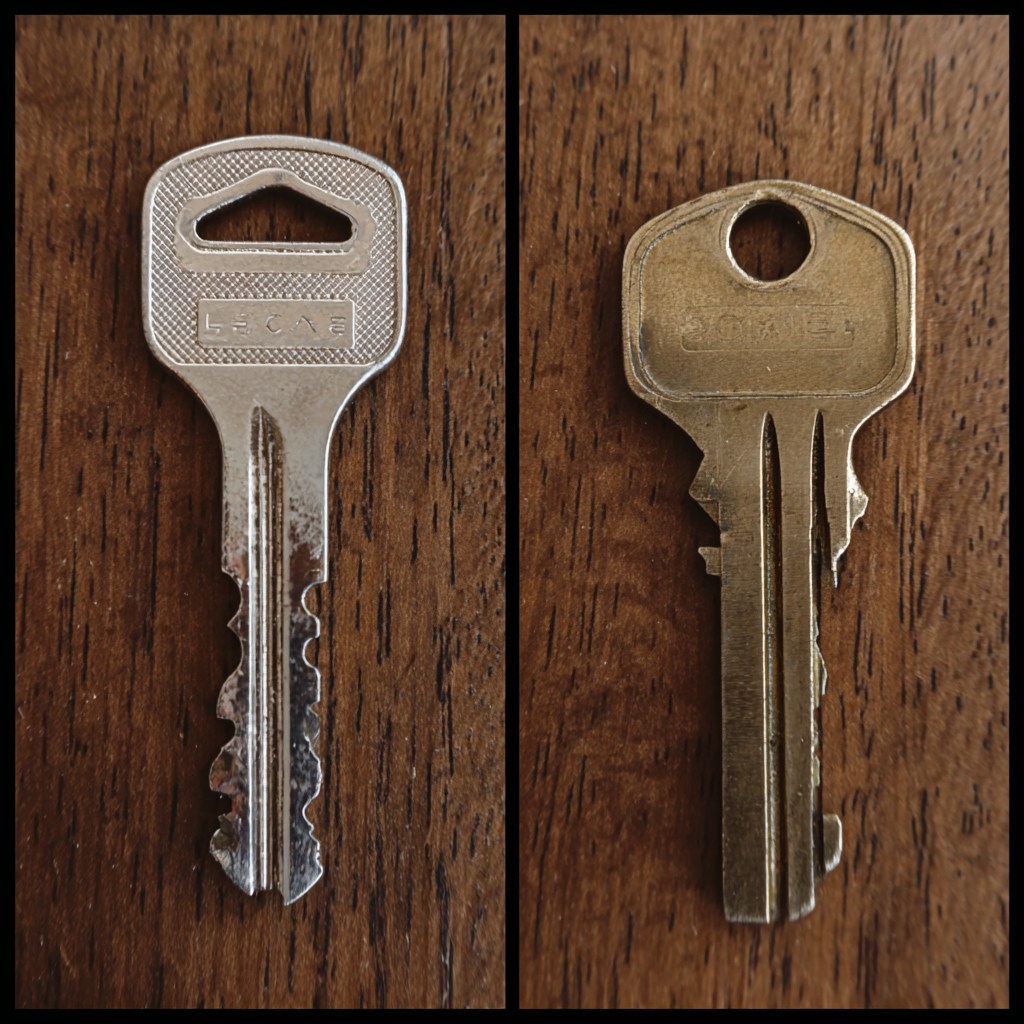
The Custody Problem: Why Holding Your Own Keys Changes Everything
Encryption alone does not guarantee data ownership. Many cloud providers keep the keys, retaining the power to decrypt or disclose your data.
Most cloud vendors love to talk about encryption. Far fewer like to talk about custody. For B2B buyers, that missing word is the difference between real data ownership and a well-decorated illusion.
Encryption Without Ownership
Typical cloud marketing sounds reassuring. "We use industry-standard encryption." "Your data is secure in our cloud." "We protect your information with bank-level security."
Technically, much of this is true. What is often left unsaid is that in many architectures, the provider generates and stores the encryption keys. The provider can decrypt data on demand. The provider can be compelled to do so by courts, governments, or internal policy.
This is custodial encryption. It is like putting your valuables in a safe where the bank holds the master key. You are protected from common thieves, but not from the landlord, the regulator, or a motivated insider.
Why Custody Matters for Regulated and High-Stakes Data
If your business operates in law, finance, healthcare, or any sensitive B2B domain, the question is no longer "Is it encrypted?" It is: Who can decrypt it? Who can be forced to decrypt it? How would we prove that someone could not have accessed it?
Using a custodial model, you are effectively outsourcing not just storage, but control. That has consequences. A breach at your provider can become your breach notice. A government request to the provider can bypass your internal approvals. A court may view "we let a third party keep the keys" as inadequate diligence.

Zero-Knowledge: When the Provider Literally Cannot Peek
Zero-knowledge architectures flip this logic.
In a zero-knowledge or client-side encryption model, keys are generated on the client device, not on the server. Encryption happens before data leaves your environment. The provider never sees plaintext data or raw keys.
If an attacker compromises the provider, they get encrypted noise. If a government agency demands access, the provider cannot comply beyond handing over ciphertext. If an insider goes rogue, they have no privileged backdoor.
From a risk and compliance standpoint, this is powerful. You can document that no third party had the technical ability to read customer data. You reduce the "blast radius" of a third-party compromise. You align technical reality with privacy promises in contracts and policies.
"But What If We Lose the Keys?"
This is the most common and valid concern. Full self-custody sounds terrifying. One lost password and your data disappears forever. Businesses cannot operate on that edge.
Modern designs solve this with techniques like key splitting and threshold cryptography, where one key is divided into multiple parts and no single holder can reconstruct it. Recovery shares allow a combination of device-based, organization-based, and user-controlled fragments to enable recovery without giving any party unilateral power. Policy-based access means organizations can enforce access control and rotation policies while still ensuring that no provider holds a master key.
The result is a spectrum. Consumer-grade convenience at one end where the provider is fully custodial. Extreme self-custody at the other. And a smart middle ground where businesses retain control, with carefully engineered recovery options that don't become backdoors.
Custody as Strategy, Not Just Security
Thinking about keys only as "security mechanisms" is limiting. Custody decisions are strategic. They influence negotiating power with regulators and enterprise customers. They impact how you position your product, privacy-first versus convenience-first. They shape your long-term resilience against policy changes, sanctions, or legal shifts.
If a significant part of your business value depends on protecting data, then "who has the keys?" is not a technical detail. It is a board-level question. If you don't hold them, someone else does. And whoever holds the keys, holds the leverage.
Your data. Your keys. No exceptions.
TransferChain Drive eliminates provider custody through true client-side encryption and zero-knowledge architecture.